

Openmind News & Updates
Latest news, updates and insights from Openmind
Mapping the Subconscious, the Final Frontier for High-Performance Coaching
What if the biggest barrier to leadership growth is the part of the mind we cannot see? Discover why true self-awareness is so rare among leaders, how subconscious habits drive behaviour, and how coaches can unlock deeper, lasting transformation through neuroscience-informed practice.

How to Drive Radical Behavioral Shifts, Without Client Burnout.
Traditional coaching often hits a wall because dialogue alone can’t access the subconscious patterns driving a client's behavior. When a disconnect exists between a client’s conscious beliefs and their actual drivers, they experience cognitive dissonance that can stall progress and lead to emotional fatigue. Find out how you can make these invisible patterns visible in the very first session and without the risk of client burnout.
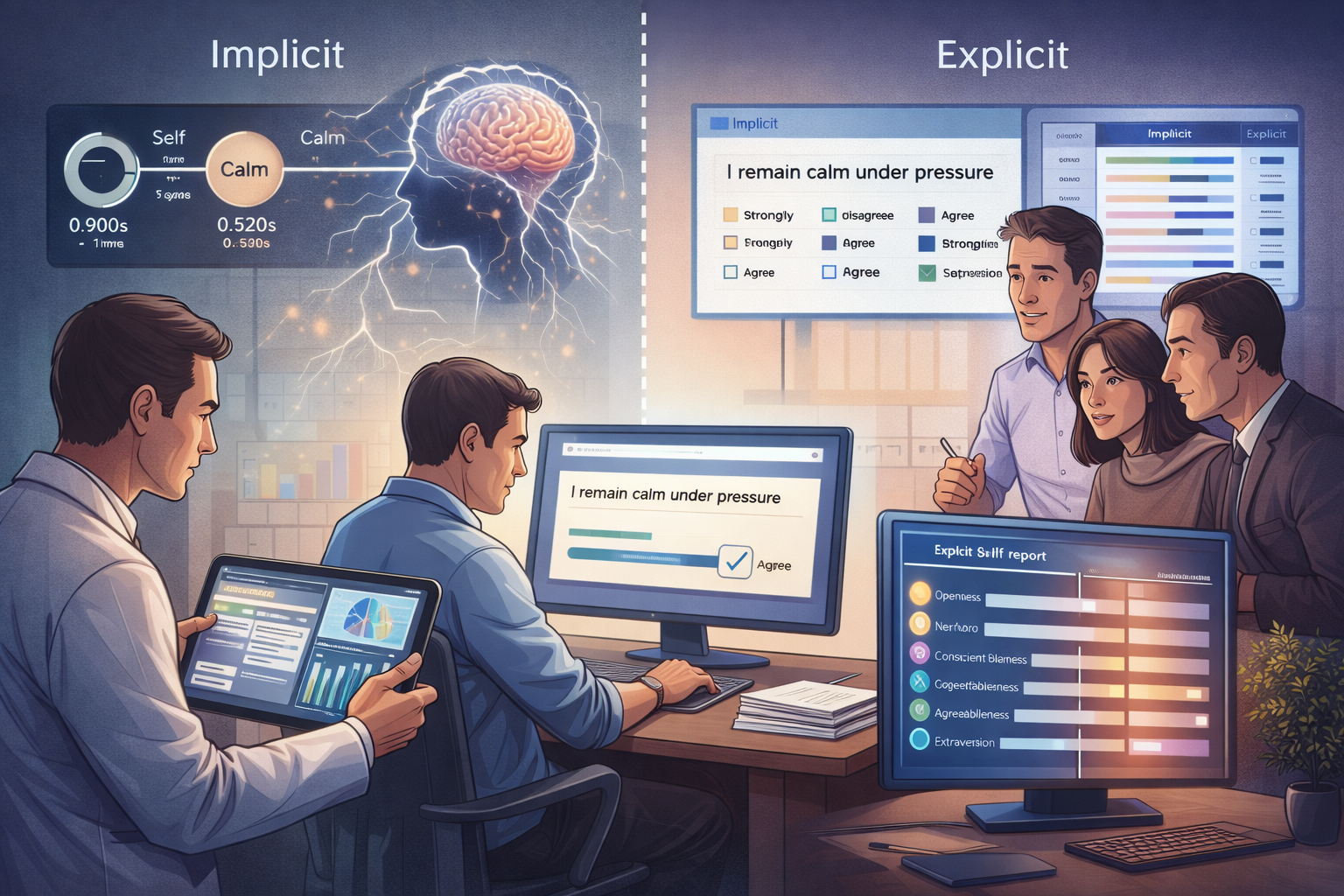
How Implicit Psychometrics Are Changing the Landscape of Psychometric Testing
What if the biggest influences on workplace behaviour are the ones we don’t realise we have? Subconscious attitudes are shaping how we lead, collaborate, and make decisions. Implicit psychometrics are changing the way psychometric testing is used by employers, coaches and practitioners allowing measurement of automatic responses that traditional assessments miss.

Why You Need to Understand Your Subconscious Mind
Your subconscious mind silently influences almost every decision you make – your emotions, your reactions, and the patterns you repeat without knowing why. It’s the vast, hidden part of the iceberg that drives your life from beneath the surface. And if you’re not aware of what’s happening there, you’re not truly in control. Until recently, it’s been impossible to truly understand what’s going on beneath the surface, but Openmind™ changes all that.

10 Ways to Use Psychometrics for Career Development and Succession Planning
Discover how psychometric assessments can transform career development, talent management, and succession planning. This expert guide explores how organisations use psychometric testing to identify high-potential employees, develop future leaders, improve employee engagement, and make data-driven talent decisions. Learn practical strategies, real-world examples, and best practices for building stronger leadership pipelines and accelerating career growth through evidence-based psychometrics.

7 Ways Improved Self-Awareness Can Help Overcome Personal and Professional Challenges
Discover 7 ways to improving self-awareness to transform the way you approach challenges, relationships, and personal growth. Featuring insights from leading business leaders and experts in coaching and leadership development, this article explores how greater self-awareness can strengthen decision-making, emotional intelligence, communication, confidence, and professional success.

Why People Struggle with Feedback – And How to Change That
Understanding why feedback triggers such responses and why learning how to reframe it can significantly improve self-awareness, relationships, and professional success.

Can Personality Tests Really Predict Success?
The growing reliance on personality assessments in hiring and professional development raises an important question: Can psychometric tools like Openmind truly predict career success?

The Illusion of Objectivity: How Implicit Bias Hijacks Decision-Making
Our minds are riddled with implicit biases that quietly shape our judgments and decisions, even when we think we are being objective.

What Your Personality Profile Says About Your Leadership Potential
Can your personality profile predict your leadership potential? Implicit personality tests, using the Big Five traits, combine with explicit assessments to reveal leadership strengths, communication styles, and decision-making preferences. Discover why self-awareness is the key to developing good leaders who are genuinely open to experience, conscientious, extravert, agreeable, emotionally stable.

How the Openmind Personality Assessment Can Improve Workplace Productivity
In today’s fast-paced corporate environment, understanding and optimizing team performance is crucial.

Are You Sabotaging Your Own Happiness? The Hidden Forces at Play
Happiness is a fundamental goal for most people, yet many unknowingly engage in behaviors and thought patterns that undermine their well-being.

Why We Avoid Tough Conversations—And How to Get Better at Them
Whether it’s confronting a friend about hurtful behavior, giving difficult feedback at work, or addressing unresolved tension in a relationship, we often find ways to sidestep or sugarcoat these interactions.

The Psychological Roadblocks That Keep You From Achieving Your Goals
Achieving personal and professional goals is often framed as a matter of effort, strategy, and opportunity. However, the most significant barriers are frequently psychological, rooted in our own minds.

Are You Underestimating Your Own Emotional Intelligence?
Emotional intelligence (EI) has long been considered a crucial factor in personal and professional success. It affects how we navigate social complexities, make decisions, and regulate our emotions.

How to Improve Self-Awareness Using Implicit Psychometrics
Openmind™ is a pioneering tool that integrates both explicit and implicit attitudes to provide a comprehensive personality blueprint.

The Hidden Side of Impostor Syndrome: When Your Brain Works Against You
Impostor syndrome is widely recognized as a psychological phenomenon where individuals doubt their accomplishments and fear being exposed as frauds.

Why Some People Struggle with Change (Even When They Say They Don’t)
Change is a universal constant, yet people’s ability to adapt to it varies widely. Some openly resist it, while others claim to embrace it.

Are You More Extroverted Than You Think? The Hidden Side of Social Confidence
Most of us believe we have a good grasp of our personality traits. But what if I told you that you might be more extroverted than you think?

Why Some People Are Natural Leaders and Others Struggle
Some people seem to take on leadership roles effortlessly, guiding teams, making strategic decisions, and inspiring others without hesitation. Why is that?